

The Intricacies of How Poems Want to Be Read
Speaker: Charles Altieri, Professor, University of California, Berkeley
Moderator: Zhang Lian, Zhejiang University
Time: April 10, 2026, at 10:00 am (Beijing Time)
Venue: Zoom 96242413769 Passcode: 2026
Zoom link: https://zoom.us/j/96242413769?pwd=tahfBi9WGua717biOchFERKSE0NwLU.1
Abstract: There are many ways poems can be read. But is there any way we can claim that poems want to read? Or what kind of a contract with readers takes place when the author signs his or her name and so takes responsibility for the decisions that try to make the work a significant experience? I think that contract involves two invitations that are also directions. First the poem should be treated not as a statement but an experience: that is the point of the poems’ interest in metaphor, and concrete embodiment, and significant structure involving interrelations in the work that are extremely difficult to paraphrase. Second, treating the poem as an invitation to participate in an experience is also a recognition that our involvement in the text will take seriously the choices established by attention to how the choice of words can shape experience. This lecture will elaborate these two directions by close attention to how five poems develop emotionally intense and complex imaginative events.
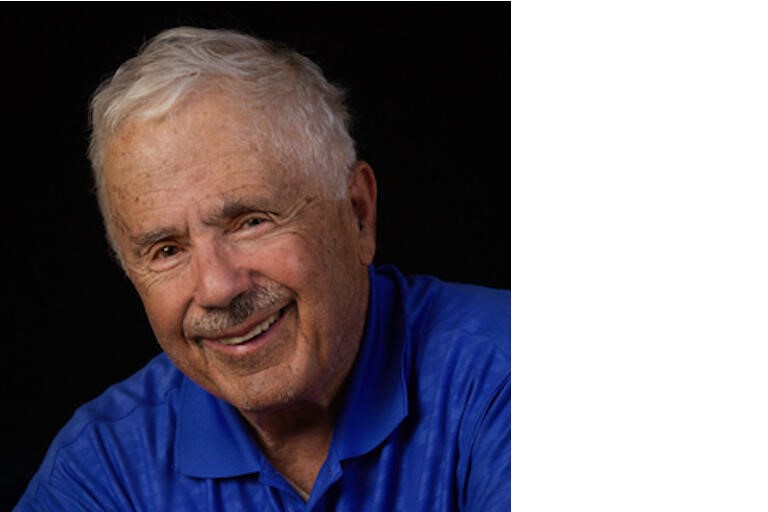
Charles Altieri, a Fellow of the American Academy of Arts and Sciences, retired in July 2021 after 52 years of university teaching, the last 28 at UC Berkeley where he was Rachel Anderson Stageberg Chair of English. He has written 11 books and over two hundred articles on 20th century British and American poets, on Shakespeare, Plato and Ovid, on relations between poetry and painting, and on various theoretical issues involving ways of reading and appreciating works of art. His most recent book, Imaginative Experience in the Arts: Promoting Liberal Education (Bloomsbury, 2025) uses distinctions between “experience of” and “experience as” to distinguish between cognitive and aesthetic enterprises. Examples of powerful imaginative experiences in the arts lead to intense theorizing about reading focused on authorial decisions, on the ways self-consciousness is involved in these readings, and on the role of “example as” in elaborating how imaginative experience connects to real world situations.