

On the afternoon of April 27, 2026, the lecture “Frontier Exploration of GenAI-Empowered Foreign Language Education”, part of the lecture series organized by the Teacher Development Center, School of International Studies (SIS), was successfully held. The lecture featured keynote presentations by Professor Jim McKinley, Professor of Applied Linguistics at University College London (UCL) and Co-Editor of the journal System, and Dr. Nathan Thomas, Associate Editor of System. The session was moderated by Professor TENG Lin, Vice Dean of SIS.
At the beginning, Professor Jim McKinley conducted an in-depth discussion on the impact of GenAI on English-medium instruction (EMI). He pointed out that GenAI is more than just a tool for enhancing efficiency, and it is reshaping students’ practices in EMI learning. Historically, EMI learning has been closely tied to English test scores or language proficiency. In the context of the widespread application of GenAI tools, students’ English expression may appear more fluent, but they may not truly develop the linguistic competence required for disciplinary knowledge construction, argumentative expression, and critical engagement.
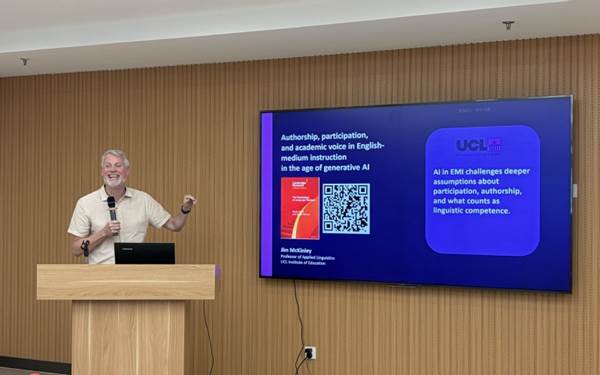
In terms of academic writing, Professor Jim McKinley stated that GenAI often reduces hedges and cautious expressions during the polishing process, which renders the text more definitive and authoritative. However, this may also subtly alter the author’s original boundaries of judgment and argumentative strength. Regarding the reform of teaching evaluation in the era of GenAI, Professor McKinley suggested that teachers should focus on whether students use GenAI, and further on how GenAI influences their learning, engagement, and understanding. He proposed integrating the use of GenAI into a visible learning process that can be discussed and assessed. He emphasized that assessment methods should shift from a sole focus on the final text to the learning process and disciplinary literacy.
In the second part of the lecture, Dr. Nathan Thomas clarified the research approach of participant narratives from the perspective of qualitative methods. He noted that the concepts of open science and open scholarship originally stemmed from quantitative research traditions, which highlighted the accessibility of data, materials, and analytical processes. However, in qualitative research, materials such as interview recordings involve privacy and ethical issues. Thus, research transparency cannot be achieved simply by disclosing raw data. To address this, Dr. Thomas proposed interpretive transparency, which means that researchers must clarify what they analyzed and how they interpreted it. He also pointed out that participant narratives can serve as analytical material positioned between original interview transcripts and final research findings. Researchers should organize interview recordings into coherent, readable narrative texts for further analysis while preserving original data as much as possible.
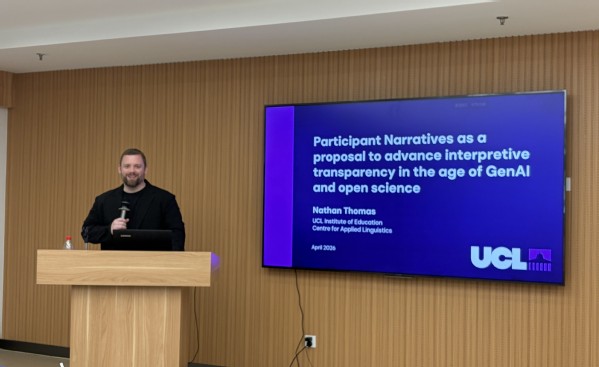
Dr. Nathan Thomas also emphasized that participant narratives are neither simple excerpts of interview contents nor the research findings. Instead, they are intermediate materials that provide greater clarity and context for subsequent analysis. Ideally, researchers should provide the compiled narrative texts back to the participants to confirm whether their intended messages are accurately represented. He argued that in an era where GenAI can rapidly extract themes, qualitative research increasingly needs to preserve listening, understanding, judgment, and reflection of human beings.
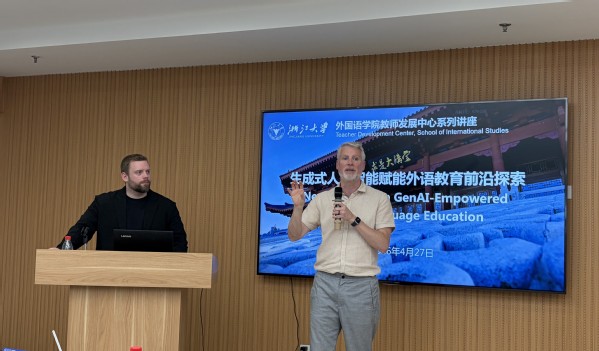
During the Q&A session, students and teachers engaged in discussions on topics such as whether GenAI polishing alters authorship and whether GenAI is suitable for analyzing qualitative data. The two experts noted that the key lies in whether users can continuously question, record, and explain the changes GenAI makes to the text, and reconfirm their own perspectives throughout the process.
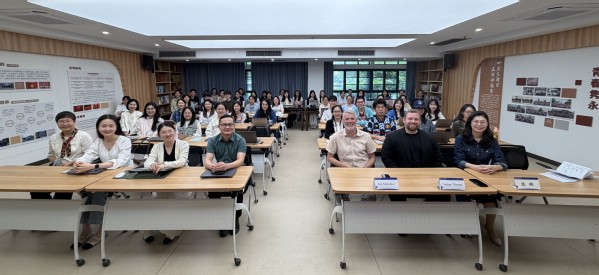
The Teacher Development Center in School of International Studies, aiming to align precisely with frontier trends in foreign language education, has established a platform for dialogues between teachers and domestic and international scholars. It supports teachers to explore teaching concepts, improve teaching standards, and empower the enhancement of undergraduate education through high-quality faculty development, thereby laying a foundation for cultivating top-tier innovative foreign language talents in the new era. As part of the lecture series organized by the Teacher Development Center, SIS, this lecture focused on the profound transformation of education models and research methods in the era of GenAI. It addressed practical challenges brought by GenAI to classroom engagement, academic writing, and assessment methods with EMI, and responded to the proposition of maintaining ethics, interpretive transparency and depth in qualitative research during the era of open science. Through interaction with the experts, students and teachers reached a consensus and deepened their reflections. They further clarified that in the new era of AI-empowered education, it is even more essential to remain true to the original mission of education, to ensure learning processes are traceable and academic judgments maintain ethical boundaries. By employing rational thinking and professional responsibility, they aim to promote the high-quality and sustainable development of foreign language education and academic research.
Texts and Photos: WANG Zhenfei
Undergraduate and Continuing Education Department, SIS
April 28, 2026
Translation: HONG Jiayao
Proofread: XU Xueying

